Points of Pride
Topics on this page:
World-class research
Our faculty and students work together to conduct ground-breaking, community-engaged research. Their discoveries change lives, from sharing new insight into extreme storms and the environment to uncovering how computer games reduce memory loss.
Trafficking in Persons Risk to Resilience Research Lab
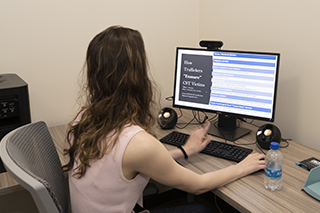
This lab is one of the first research centers dedicated to studying the myriad impacts
of human trafficking in Florida. It is the statewide repository for anonymous human
trafficking data, collecting and analyzing statewide data to better understand the
magnitude and trends in human trafficking across the state and over time. The lab
released a first-of-its-kind report that shined a light on the high risk and occurrences of human trafficking in the
state as well as the growing, coordinated response to combat the crime and aid victims.
Initiative on Coastal Adaptation and Resilience (iCAR)
The Initiative on Coastal Adaptation and Resilience (iCAR) brings together scientists, policymakers and the community to focus on preparing and becoming more resilient to present and future environmental changes. Recently, the initiative spearheaded by GIS and Remote Sensing Professor Barnali Dixon has organized a "storm squad" consisting of neighborhood leaders who disseminate critical information to vulnerable communities during extreme storm events, and launched a flood tracking app that has become a critical tool in helping local communities monitor and respond to extreme storms.
Preventing Alzheimer's with Cognitive Training
Jennifer O’Brien, an associate professor of psychology, is the principal investigator of a study investigating whether computerized brain training exercises can reduce the risk of Alzheimer’s disease in older adults. The Preventing Alzheimer's with Cognitive Training (PACT) study, funded by a $44.4 million National Institutes of Health grant, is the largest study of its kind to date, investigating not only how to possibly prevent dementia but also how to detect it earlier.
La Florida: The Interactive Digital Archives of the Americas
This award-winning, innovative project brings early Florida's diverse population to life through short videos, interactive maps and a searchable population database. Led by Professor J. Michael Francis, it weaves together the lives and critical events of America’s earliest beginnings – such as the founding of the first permanent European settlement in the continental U.S. at St. Augustine in 1565; the original St. Patrick’s day celebration, which was discovered through this project to have taken place in Florida in 1601; and the first free black settlement anywhere in the colonies at Fort Mose in 1738.
The Family Study Center, directed by Dr. James McHale, is concerned with understanding, supporting, and advocating for families with young children. Since its inception, this center has been a base for innovative new projects and initiatives to support coparenting and children’s development. Recently, the center secured a $3.7 million grant from the U.S. Department of Health and Human Services for a project designed to reduce family stress and instability by identifying and testing the most effective strategies to strengthen parental relationships and create supportive home environments.
Hands-on learning
We believe in the value of experiential learning, which gives students a broader view of the world and a deeper appreciation for their community. We have launched several initiatives and opened facilities aimed at giving students valuable hands-on experience.
Innovation Scholars Career Exploration
The Innovation Scholars Career Exploration Program provides unique job shadowing opportunities for incoming, high-achieving, first-year students by partnering them with companies and professionals in and around St. Petersburg and within the St. Petersburg Innovation District. The program has provided hundreds of students with a valuable introduction to industries and job fields as they shadow mentors and test career options to help solidify major choices and academic paths early in their university experience.
Merrill Lynch Wealth Management Center
In 2018, the Bank of America Charitable Foundation gave a $500,000 grant that established the Merrill Lynch Wealth Management Center in the Kate Tiedemann School of Business and Finance. Since then, the venue and its faculty have given college students the tools and ability to manage stock investments while spearheading initiatives that advance financial literacy in the community.
Our College of Education's Emerging Technology Lab is equipped with a suite of tools – including artificial intelligence (AI), augmented reality (AR) and virtual reality (VR). The lab is designed to provide students from all majors with real-world experiences in visual and simulated content. It is located next to the STEM Inquiry Lab in Heller Hall, which provides students further opportunities to learn about robotics, engineering and fabrication tools. The corridor is aptly named Innovation Lane.
For the past six U.S. presidential campaigns, students have had the opportunity to participate in a 10-day internship that offers a hands-on look at how a presidential primary campaign is run. Organized by Political Science Professor Judithanne Scourfield McLauchlan, students travel to New Hampshire or South Carolina before the state’s primary election, where they perform tasks such as canvassing and phone banking for one of the presidential hopefuls.
Community-focused
Our commitment to serve reaches beyond our campus. Students, faculty and staff are deeply embedded in our community, committed to working with partners to further learning and knowledge.
The Eileen Hoffman Hafer UMatter Program
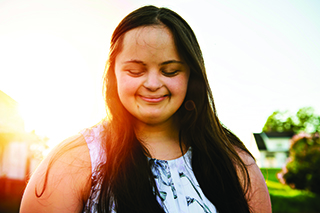
The UMatter program provides young people with intellectual disabilities the opportunity to experience higher education and campus life. Students live in residence halls, attend sporting events and participate in clubs while pursuing their academic passions. Along the way, they learn social skills such as how to do laundry, grocery shop, make healthy lifestyle choices and participate in career training. Established through a $900,000 grant from the Florida Center for Students with Unique Abilities, it received a $1.2 million gift from Andrew and Eileen Hafer in 2021 and $1 million from the state of Florida in 2025.
A popular adult learning program that offers classes, workshops, lectures and social networking opportunities for individuals aged 50 and older has expanded its diverse educational offerings to St. Petersburg. The Osher Lifelong Learning Institute (OLLI) is a member-based community that provides high-quality, low-cost learning opportunities from faculty and community experts. Courses offered to date include storytelling, history, international politics, love, happiness and more.
USF St. Petersburg and the Florida YMCA work together to offer the Civics Fellows Program, an initiative designed to enhance civic education in the state by giving high school students hands-on experiences in government and public service. The program culminates with a week-long institute hosted on the USF St. Petersburg campus, which gives students the opportunity to directly engage with elected officials, emergency responders and many others who help run government in the state of Florida.
USF Pearls is a program launched on the St. Petersburg campus that was designed and created for students emerging from the foster-care system. Nationally, the graduation rate of persons emerging from the foster-care system with a 4-year degree is less than 2%. The USF Pearls program aims to close the degree attainment gap for these motivated and talented students. A $60,000 grant from the Genspiration Foundation created an onboarding and mentorship program to support incoming students emerging from foster care and navigating the transition into higher education.
Sustainably-minded
At USF St. Petersburg, we believe in being good stewards of the environment. Care for our natural environment and sustainability is a large part of the campus culture and identity.
This student organization and fund is used to assist USF in reducing greenhouse gas emissions and improving energy efficiency by investing in alternative energy, reducing waste and improving conservation on campus. The fund directly involves students with sustainability initiatives and alternative energy projects that benefit the campus and the community. Funds have been used to invest in solar arrays, water bottle refill stations, an industrial-sized composter and more.
The Warehouse Laboratory, which houses biology, chemistry and physics labs, received LEED Platinum certification from the U.S. Green Building Council. Platinum is the highest and hardest certification to earn from the most widely used green building rating system in the world. The Warehouse Laboratory is the first USF building to receive this recognition. USF St. Petersburg has 6 LEED certified buildings.
Fresh and Local Greenhouse Project
Funded by a $25,000 grant from the Ford Motor Company Fund, the campus worked with the St. Pete Youth Farm to establish a greenhouse to help address food insecurity in South St. Pete, where access to affordable and nutritious food is limited. The greenhouse produces up to 150 pounds of fresh vegetables for the community each month, and engages college and high school students in agriculture and business development skills each semester.
A 100 kW solar array and a 200kW Tesla battery storage system was installed in partnership with Duke Energy on top of the campus’ 5th Avenue Parking Facility. Solar energy that is not used by the garage for lights, elevators and electric-vehicle charging stations is stored in battery systems or put onto the electric grid for immediate use.